How to Copytrade FOMO Traders
A practical, honest guide — updated October 2026
- • You can’tcopytrade FOMO with a normal Solana bot — FOMO buys arrive as airdrop-style transfers that standard bots don’t detect.
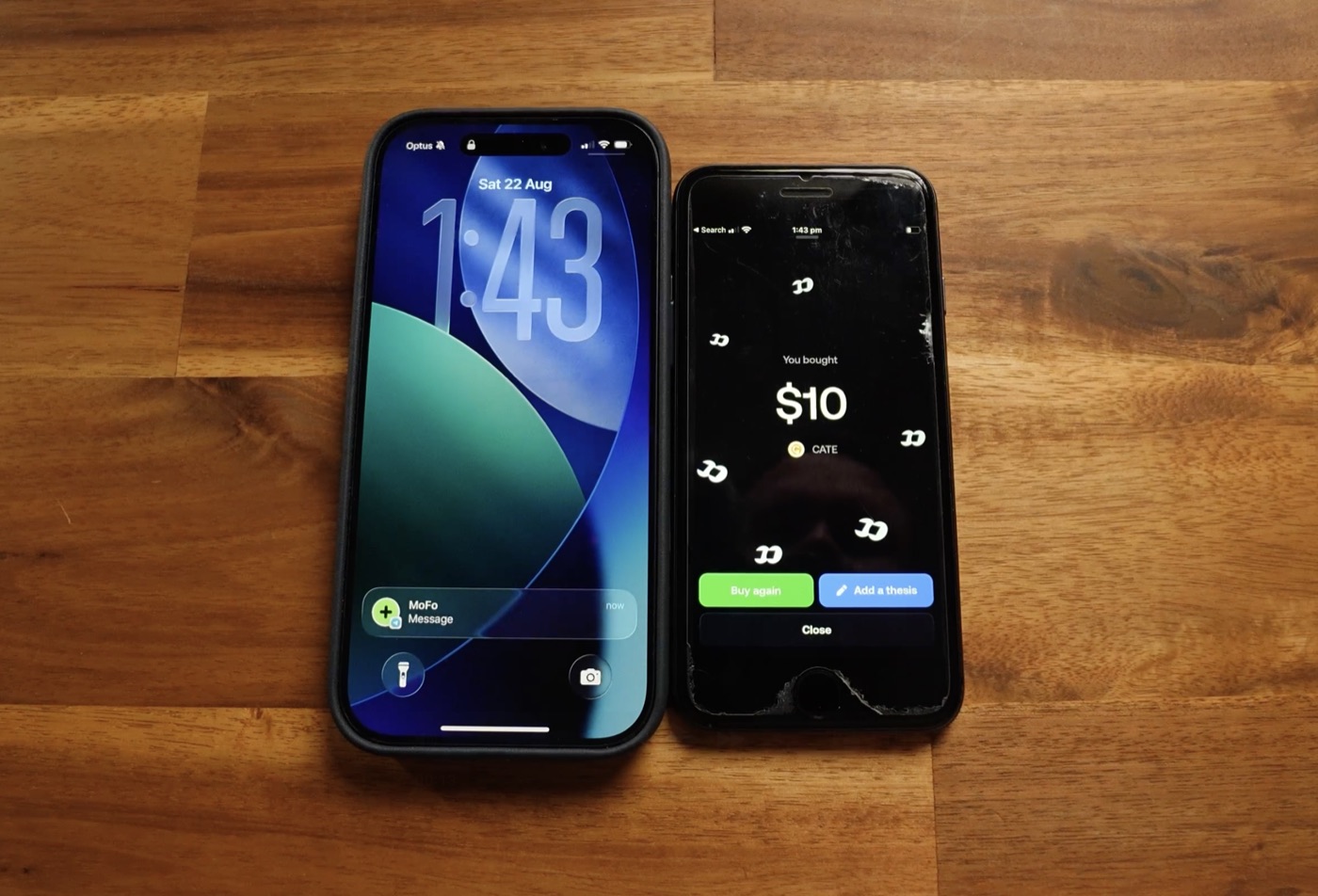
- • The edge is speed: fill ~1 second after the trader, before the FOMO notification sends the retail wave.
- • Take initials early, let a moonbag ride — the exit settings matter more than the picks.
- • Copy conviction traders, avoid high-frequency swingers who chew your bankroll.
- • It’s high-risk. Start tiny, keep tight stops, size up only after you verify results.
What is copytrading FOMO — and why can't normal bots do it?
FOMO is a mobile app where you follow a trader’s profile and see their trades. Copytrading means automatically buying what a chosen trader buys, the moment they buy it.
Here’s the catch that trips up every off-the-shelf copy bot: when someone buys a coin on FOMO, they’re not calling a DEX contract directly. Their wallet signs a signature, the swap is executed behind the scenes, and the token is delivered to them — on-chain it looks like the wallet received an airdrop, not like a buy. Standard copy bots watch for normal DEX buys, so they never see the trade fire. That’s why, if you’ve tried to copytrade FOMO with a generic bot, it simply didn’t work.
To copy FOMO you need a bot that reverse-engineers this transfer pattern and treats the “receive” as the buy signal. That’s the whole reason a purpose-built FOMO copy bot exists.
Why does copytrading FOMO actually work?
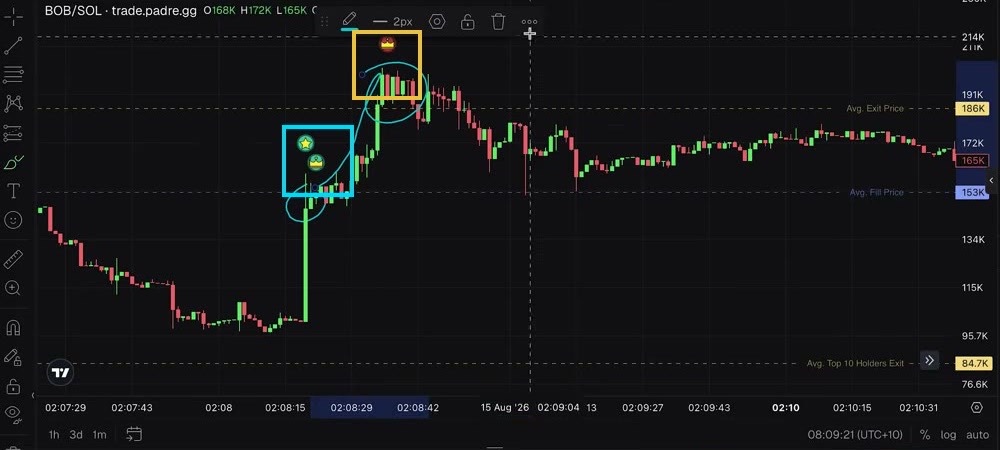
When a big trader buys a coin on FOMO, the app pushes a notification to a huge base of retail users seconds later. If your bot fills in the ~1 second after the trader’s buy, you’re in before that notification wave hits— positioned ahead of the retail buyers whose orders create the spike. Used loosely, it’s a small arbitrage: you enter, the notification fires, retail floods in, and that’s the 10–20 second spike you see on so many of these charts.
The important nuance, from tracking thousands of these buys: the edge is front-loaded into the first ~60 seconds.After that window the retail wave has already played out, and a late entry is just chasing a candle that already moved. Speed isn’t a nice-to-have — it’s the entire thesis.
One honest caveat: not every trade spikes. Plenty of coins go nowhere. The notification effect is real but probabilistic — it tilts the odds, it doesn’t guarantee a pump.
How to copytrade FOMO — step by step
- 1Get the bot. FOMO copy trading runs through a Telegram bot (Mofo). Open it, hit start, and set a PIN immediately.
- 2Set your withdrawal address. Point it at your own wallet (Phantom, an exchange, wherever) so you can pull funds out anytime.
- 3Fund the wallet. The bot gives you a deposit address. Send SOL (or USDC) — start small, e.g. 0.3 SOL, while you learn it.
- 4Add a trader to copy. You don’t need to hunt for wallet addresses. Just paste the trader’s FOMO handle. (Not sure who to pick? The FomoTop leaderboard ranks traders by how far their coins run after they buy.)
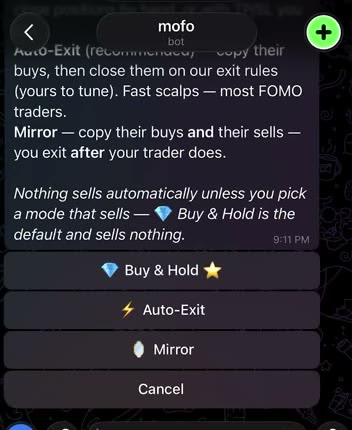
- 5Choose a copy mode. Buy & hold (buy, never auto-sell), auto-exit (your own take-profit / stop-loss / time rules), or mirror (you also sell when they sell). Mirror can protect you when a trader dumps fast; auto-exit gives you full control of the exit.
- 6Set a fixed trade size. A fixed amount per trade (e.g. $5–$10) keeps your head clear and your risk even across trades.
- 7Turn on the safety filters. Pump.fun-only ON(skips weird-liquidity coins that can rug — you’ll miss a few trades, but you won’t get liquidity-pulled while you sleep). Buy-once cooldown ON(so a trader sizing in over and over doesn’t trigger ten buys). Retry buys ON.
What exit strategy should you use?
This matters more than the picks. The setup that works well across most traders:
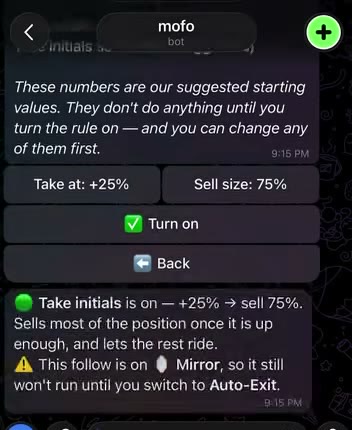
- Take initials at +25% — Sell ~75% of the position when it’s up ~25%. You bank the initial retail pump and the wick — from there you’re riding house money.
- Trail the moonbag −25% to −35% — Let the remaining ~25% ride. If it’s a runner, you catch the whole move; when it pulls back 25–35% off its peak, you’re out. This is what turns an average day green — a few runners carry the book.
- Floor: −45% tightening to −20% over ~50s — A wide floor at entry means the launch chop doesn’t wick you out; it tightens to −20% once the initial volatility passes. Great protection against getting stopped out at the worst moment.
- Time cap ~300s — If a coin just sits flat, cut it. This keeps your capital churning — a small bankroll gets more runway when you’re not stuck holding dead positions.
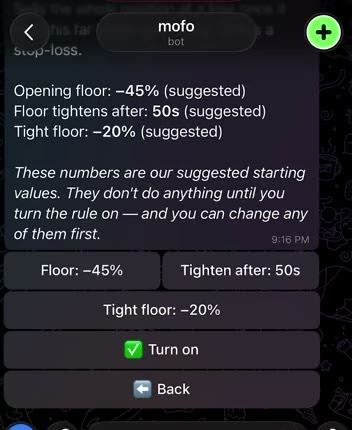
Chasing consistency instead of monsters?On choppier, lower-hit-rate coins, a plain full-clip take-profit — sell 100% at +25–30% with a tight ~−20% stop — gives you a higher win rate and a steady grind, at the cost of the occasional huge runner. There’s no single “best” number: tighter, faster exits win more often but smaller; wider exits win less often but let the bangers run. Match it to how volatile the coins you’re copying actually are.
Which FOMO traders should you copy?
The single biggest mistake is copying a high-frequency swinger. A trader who fires ten-plus trades a day might finish up 30% — but a copier following them will often just break even or worse, because you enter slightly behind on size and you eat every red trade in the streak. It only takes three or four bad trades in a row to start eroding your balance.
Favor conviction traders instead: a handful of higher-quality buys, spread out, rather than constant churn. Before copying anyone, look at their recent closedpositions — a wall of red in a short window is a red flag, no matter how good the headline PnL looks. And check where a trader’s big gains actually came from; a single lucky bag can flatter a whole month.
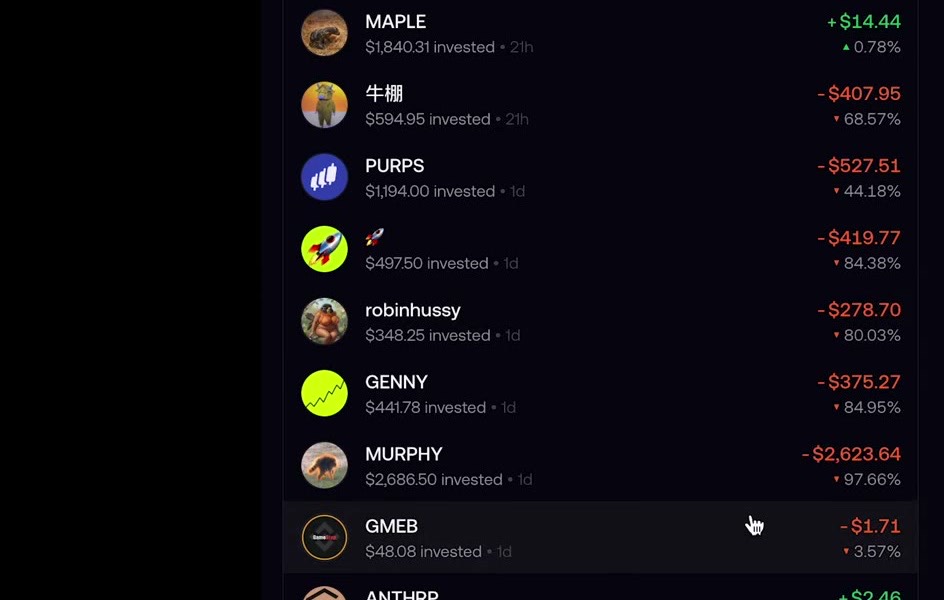
This is exactly what the FomoTop leaderboard is built to measure. It tracks every tracked trader’s buys, charts each coin for 48 hours, and ranks them by how often and how far their coins run — on a first-buy basis, so a trader who averages down into a falling coin can’t inflate their win rate. It’s the “who actually picks winners” answer, separate from raw PnL.
What does it cost, and is it profitable?
Bot fees are around 1% per trade — standard for Telegram trading bots and terminals. The cost that quietly eats small accounts is transaction/priority fees: if you’re moving in and out of many trades with a tiny bankroll, those add up. Larger trades are more fee-efficient; keep priority fees on “normal” unless you’re trading size.
Can it be profitable? Yes — but be clear-eyed. You will not get a 100% win rate.You’ll eat losses, and one or two really bad ones — where the bot can’t sell before a crowd dumps a coin — can undo a string of small wins. You need the occasional fat runner to lift the portfolio. Results swing hard with trader selection, entry speed, exits, and market conditions.
Do this:start with only what you can afford to lose, keep tight tolerances, verify your results on-chain (not just the bot’s reported PnL), and size up only once you’ve seen it work with your own settings.
Frequently asked questions
- Can you copytrade FOMO?
- Yes, but not with a normal Solana copy-trading bot. When someone buys on the FOMO app their wallet doesn't call a DEX directly — it signs a signature, the swap happens behind the scenes, and the token is delivered to them like an airdrop transfer. Standard copy bots watch for DEX buys, so they never see the trade. You need a bot built specifically to detect FOMO's transfer pattern.
- Why does copytrading FOMO work?
- When a large FOMO trader buys a coin, the app pushes a notification to hundreds of thousands of retail users seconds later. A copy bot that fills in the ~1 second after the trader's buy gets in before that retail wave arrives — so you're often positioned ahead of the spike the notification itself creates. The edge lives in the first ~60 seconds; after that you're just chasing.
- What is the best exit strategy for copytrading FOMO?
- The most consistent approach is to take initials early (sell ~75% of the position at +25–50%) so you're playing with house money, then let the remaining 'moonbag' ride a trailing stop (about −25% to −35% off its peak). Pair it with a wide-then-tightening floor for the first ~50 seconds and a time cap so dead positions get cut. On lower-hit-rate environments, a simple full-clip take-profit (sell everything at +25–30% with a tight stop) trades away the occasional monster for a steadier win rate.
- Which FOMO traders should you copy?
- Favor conviction traders who make a few high-quality buys over high-frequency traders who fire off ten-plus trades a day. A high-frequency trader can be up 30% and still leave copiers underwater, because you enter slightly behind them on size and eat every red trade in the streak. Check a trader's recent closed positions: lots of red in a short window is a warning sign. FomoTop ranks traders by how far their coins actually run after they buy, on a first-buy basis, so averaging-down can't inflate the numbers.
- Is copytrading FOMO profitable?
- It can be, but it is high-risk and far from guaranteed. You will have losing trades, and one or two bad ones — where the bot can't sell before a coin dumps — can erase a run of small wins. Profitability depends heavily on trader selection, entry speed, exit settings, and fees. Start with only what you can afford to lose, keep tight tolerances, and size up only after you've verified results on-chain.
- How fast does a copy trade fill?
- A well-built FOMO copy bot fills roughly one to two seconds after the trader's own buy. That's fast enough to be ahead of the retail notification wave, but you still pay a small entry premium versus the trader's exact price because their buy (and yours) moves the coin. Budget for that premium when you set take-profit levels.
Pick a trader from the leaderboard, then set up the copy bot with the exit rules above. Start small.
Why we point to Mofo:we’re not affiliated with it and we didn’t build it — we recommend it simply because it’s the one tool we’ve found that actually detects FOMO’s airdrop-style buys and copies them reliably. We use it ourselves. The link is a referral, so it helps fund FomoTop at no extra cost to you — but you can search “Mofo copy bot” and go direct if you’d rather.
FomoTop is an independent data/leaderboard site. Nothing here is financial advice; copytrading is high-risk and you can lose money. Do your own research.
Tutorial method and screenshots courtesy of NatesTokens (YouTube), used with permission.